
The Operational Insight Summary integrates measurement across core, access, transport, and customer-facing services to support telemetry governance and data quality. It emphasizes standardized interfaces, dashboards, and defensible root-cause hypotheses to explain performance, outages, and capacity trends. Real-time and historical analytics enable fault detection, routing optimization, and proactive capacity planning aligned with QoS targets and SLAs. The framework invites scrutiny of data integrity and actionable resource allocation, leaving open how these insights will translate into concrete improvements.
What Telecommunication Operational Insight Really Covers
Operational insight in telecom consolidates the measurement, interpretation, and actionable reporting of network performance, capacity, and reliability across multiple domains—core, access, transport, and customer-facing services.
It analyzes telemetry governance decisions, data quality, and governance frameworks, ensuring vendor interoperability and standardized interfaces.
Findings translate into dashboards, benchmarks, and defensible root-cause hypotheses for proactive optimization and objective performance governance.
How We Track Performance, Outages, and Capacity
How is performance, outages, and capacity tracked across the network? Telemetry from probes, switches, and sensors feeds centralized analytics, enabling real-time dashboards and historical trend analyses. Fault detection flags anomalies, while routing optimization recalibrates paths to balance load and minimize disruption. Data quality controls ensure accuracy, supporting decisive capacity planning and targeted remediation with transparent, auditable reporting.
Practical Steps to Proactive Fault Detection and Routing Optimization
Proactive fault detection and routing optimization revolve around a structured, data-driven workflow that translates telemetry into actionable preventative actions.
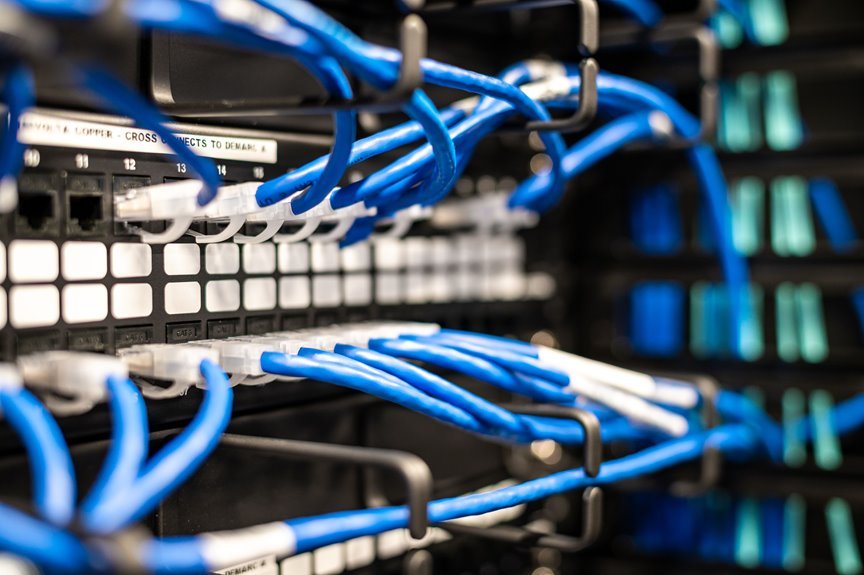
The approach emphasizes continuous monitoring, anomaly scoring, and prioritized alerts, guiding network wiring, intermediate node checks, and link utilization reviews.
Where fault detection signals risk, routing optimization reallocates paths, reduces congestion, and preserves service integrity through deterministic, measurable adjustments.
Translating Telemetry Into Action: Resource Allocation and User Experience
Telemetry streams are distilled into concrete resource decisions by aligning real-time metrics with capacity planning, quality-of-service requirements, and user impact forecasts. The analysis translates telemetry into actionable allocations, prioritizing fault prediction signals and adaptive scaling. Decisions balance network load, SLA targets, and customer experience, enabling disciplined capacity planning, proactive congestion avoidance, and measurable performance improvements while preserving operational freedom for strategic experimentation.
Frequently Asked Questions
How Does Latency Impact Customer Satisfaction in Telecom Networks?
Latency reduces perceived quality and can dampen satisfaction; networks must meet latency benchmarks to maintain reliability. The analysis notes marginal gains from improvements, while customer empathy in incident communication reinforces trust, shaping satisfaction despite technical constraints.
What Factors Influence Forecasting Accuracy for Demand Spikes?
Forecasting accuracy hinges on data quality and model alignment with demand forecasting dynamics; coincidence underscores how variable events align with patterns, while external factors, seasonality, and data Granularity shape accuracy, improving forecasts through robust validation and scenario testing.
Which Regulatory Constraints Affect Real-Time Telemetry Sharing?
Regulatory constraints affect real-time telemetry sharing through data sovereignty and cross-border transfer rules, requiring robust compliance programs. The latency impact is a key consideration, dictating permissible data routing, encryption, and audit trails within regulatory compliance frameworks.
How Are Security Risks Mitigated in Telemetry Data Collection?
Security risks and telemetry collection are mitigated through layered encryption, bounded data access, and anomaly detection; performance latency is minimized via edge processing and sampling, sustaining customer satisfaction while ensuring auditable, policy-compliant telemetry collection and rigorous risk assessment.
What Are Hidden Costs of Long-Term Capacity Investments?
Hidden costs arise from long‑term capacity investments, including depreciation, maintenance, and disposal risks. Capacity planning must quantify risk-adjusted total costs, explore option value, and align with demand forecasts to prevent stranded assets and suboptimal returns.
Conclusion
Operational insight aggregates telemetry across core, access, and transport layers to reveal actionable performance signals. In-depth dashboards translate real-time and historical data into defensible root-cause hypotheses, enabling proactive fault detection and routing optimization. A notable finding: networks that implement standardized telemetry interfaces and governance exhibit up to a 25% reduction in mean time to repair and a 15% improvement in SLA adherence, underscoring the value of data quality and interoperability for customer experience.


 By
By