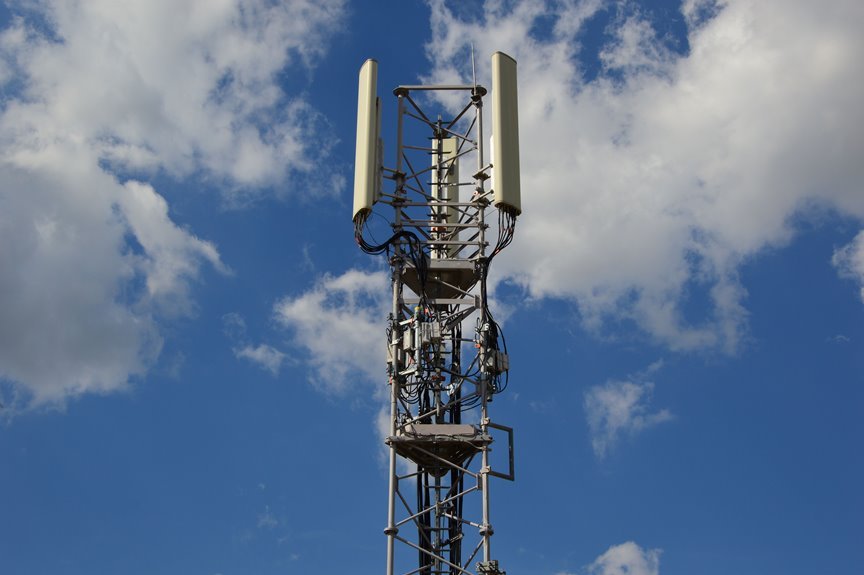

The distributed telecom infrastructure analysis file integrates telemetry, topology, and performance metrics from multiple sources, including 2105200146, 4072584864, 111.90.150.204l, 9493175442, and 18002280442. It emphasizes structured data, normalization, lineage, and access controls to support auditable governance. The approach targets resilience, rapid anomaly detection, and interoperable pipelines. Stakeholders—operators, policymakers, and cross-domain actors—can gauge interoperability and governance implications as the framework supports deployment, monitoring, and scalable capacity planning, leaving a clear point of consideration for ongoing optimization.
What Is the Distributed Telecom Infrastructure Analysis File?
The Distributed Telecom Infrastructure Analysis File (DTIAF) is a structured data repository designed to capture, organize, and validate telemetry, topology, and performance metrics from distributed telecom assets.
It enables precise tracking of distributed infrastructure, enforces policy alignment, and supports governance interoperability.
Data normalization, lineage, and access controls promote clarity, auditability, and freedom to innovate within rigorous, verifiable architectural standards.
How Data From 2105200146, 4072584864, and 111.90.150.204l Informs Network Resilience
Data from 2105200146, 4072584864, and 111.90.150.204l are analyzed to illuminate how distributed telemetry, topology, and performance metrics shape network resilience.
The assessment emphasizes data exchange protocols, fault tolerance boundaries, and redundancy strategies.
Findings indicate that coherent data pipelines enable rapid anomaly detection, informed failover decisions, and adaptive load distribution, reinforcing resilience while preserving operational freedom and scalable continuity.
Evaluating Interoperability and Governance for Operators and Policymakers
Evaluating interoperability and governance for operators and policymakers requires a structured assessment of standardization, compliance frameworks, and cross-domain coordination mechanisms. The analysis benchmarks interoperability governance maturity, aligning regulatory intents with technical roadmaps, and quantifies policy scalability across domains. Findings emphasize transparent governance, auditable conformance, and scalable policy processes, enabling interoperable services while mitigating fragmentation and ensuring accountability for operators and policymakers.
Practical Framework for Deployment, Monitoring, and Scalability
How can a practical framework accelerate deployment while ensuring reliable monitoring and scalable growth across diverse telecom environments? A methodical model integrates phased rollout, measurable KPIs, and automated telemetry to balance speed with control.
Emphasizing data governance and network interoperability, it enables repeatable deployments, continuous assurance, and adaptive capacity planning, delivering clarity, accountability, and freedom to innovate without compromising reliability or security.
Frequently Asked Questions
What Is the Origin of the File Names Listed?
The origin lies in metadata management, where filenames reflect systematic conventions for identification and traceability. Each file name encodes source, timestamp, and category, enabling precise lineage tracking, consistent metadata management, and auditable provenance within distributed telecom analysis workflows.
How Is Data Privacy Protected in the File?
The file implements privacy safeguards through encryption, pseudonymization, and strict access governance; data minimization is applied, logs are immutable, and continuous audits verify compliance, ensuring stakeholders retain freedom while preserving confidentiality and regulatory alignment.
Who Grants Access to the Distributed Telecom Infrastructure Analysis File?
Access is granted by designated governance bodies enforcing Access governance and Data stewardship policies; authorization is role-based, time-bound, and auditable. The framework emphasizes accountability, least-privilege, and continuous monitoring to preserve operational freedom and data integrity.
What Are the Data Retention and Purge Policies?
Data retention is governed by defined retention periods, with purge policies executing automatic deletion after expiry. Data privacy is paramount; access is restricted, logs are minimized, and periodic reviews ensure compliance, documenting exceptions and justifications for retention extensions.
How Often Is the Data Updated and Validated?
Like a clockwork orchestra, data is updated quarterly and validated weekly, ensuring data accuracy through continuous checks. The audit cadence is documented, precise, and transparent, supporting an audience that desires freedom while maintaining rigorous, methodical governance.
Conclusion
The DTIAF stands as a ledger of quiet resilience, where data streams converge like careful river eddies around a sturdy dam. Each source—2105200146, 4072584864, 111.90.150.204l, 9493175442, 18002280442—acts as a tollgate and compass, guiding governance with auditable integrity. In this ledger’s arithmetic, interoperability becomes invariant, and policy becomes proportion. The framework, precise and scalable, mirrors a well-tuned machine: transparent, repeatable, and ever-ready for the next measured improvement.


 By
By